


Books
|
|
|
|
Select Publications (see CV for complete list)
- Forthcoming (with Josh Brekel). "Bayesianism in Science." In Hansson (ed.), Comprehensive Philosophy of Science.
[ Preprint • Abstract ] - Forthcoming. "Toward a Normative Exploration of Compositional Abduction." Studies in History and Philosophy of Science.
[ Preprint • Abstract ] - Forthcoming. "Exploratory Inference to the Best Explanation in Medicine." In Gonzalez (ed.), Proceedings of the Conference on Philosophy of Medicine.
[ Preprint • Abstract ] - 2024 (with David H. Glass). "Conjunctive Explanations: When Are Two Explanations Better than One?" Synthese.
[ Article • Abstract ] - 2023. "On the Logical Structure of Best Explanations." Philosophy of Science.
[ Article • Abstract ] - 2023 (with David H. Glass). "Conjunctive Explanation: Is the Explanatory Gain Worth the Cost?" In Schupbach and Glass (eds.), Conjunctive Explanations: The Nature, Epistemology, and Psychology of Explanatory Multiplicity.
[ Article • Abstract ] - 2023. Review of The Last Writings of Thomas S. Kuhn: Incommensurability in Science, edited by Bojana Mladenović. The Review of Metaphysics.
[ Review • Preprint ] - 2021. "William Paley." In Goetz and Taliaferro (eds.), The Encyclopedia of Philosophy of Religion.
[ Article • Abstract ] - 2019. "Conjunctive Explanations and Inference to the Best Explanation." TEOREMA (invited contribution to a special issue on "Explanation in Science").
[ Article • Abstract ] - 2019. Review of Truth-Seeking by Abduction, by Ilkka Niiniluoto. Notre Dame Philosophical Reviews.
[ Review ] - 2018. "Robustness Analysis as Explanatory Reasoning." British Journal for the Philosophy of Science.
[2018 Popper Prize Winner • Article • Abstract ] - 2018. "Troubles for Bayesian Formal Epistemology?" Res Philosophica.
[ Article • Preprint • Abstract ] - 2018. Review of Formal Epistemology and Cartesian Skepticism: In Defense of Belief in the Natural World, by Tomoji Shogenji. Notre Dame Philosophical Reviews.
[ Review ] - 2017 (with David H. Glass). "Hypothesis Competition Beyond Mutual Exclusivity." Philosophy of Science.
[ Article • Preprint • Abstract ] - 2017. "Inference to the Best Explanation, Cleaned Up and Made Respectable." In McCain and Poston (eds.), Best Explanations: New Essays on Inference to the Best Explanation.
[ Preprint • Abstract ] - 2017. "Experimental Explication." Philosophy and Phenomenological Research.
[ Article • Abstract ] - 2017 (with Igor Douven). "Formal Epistemology." Oxford Handbooks Online.
[ Article • Abstract ]
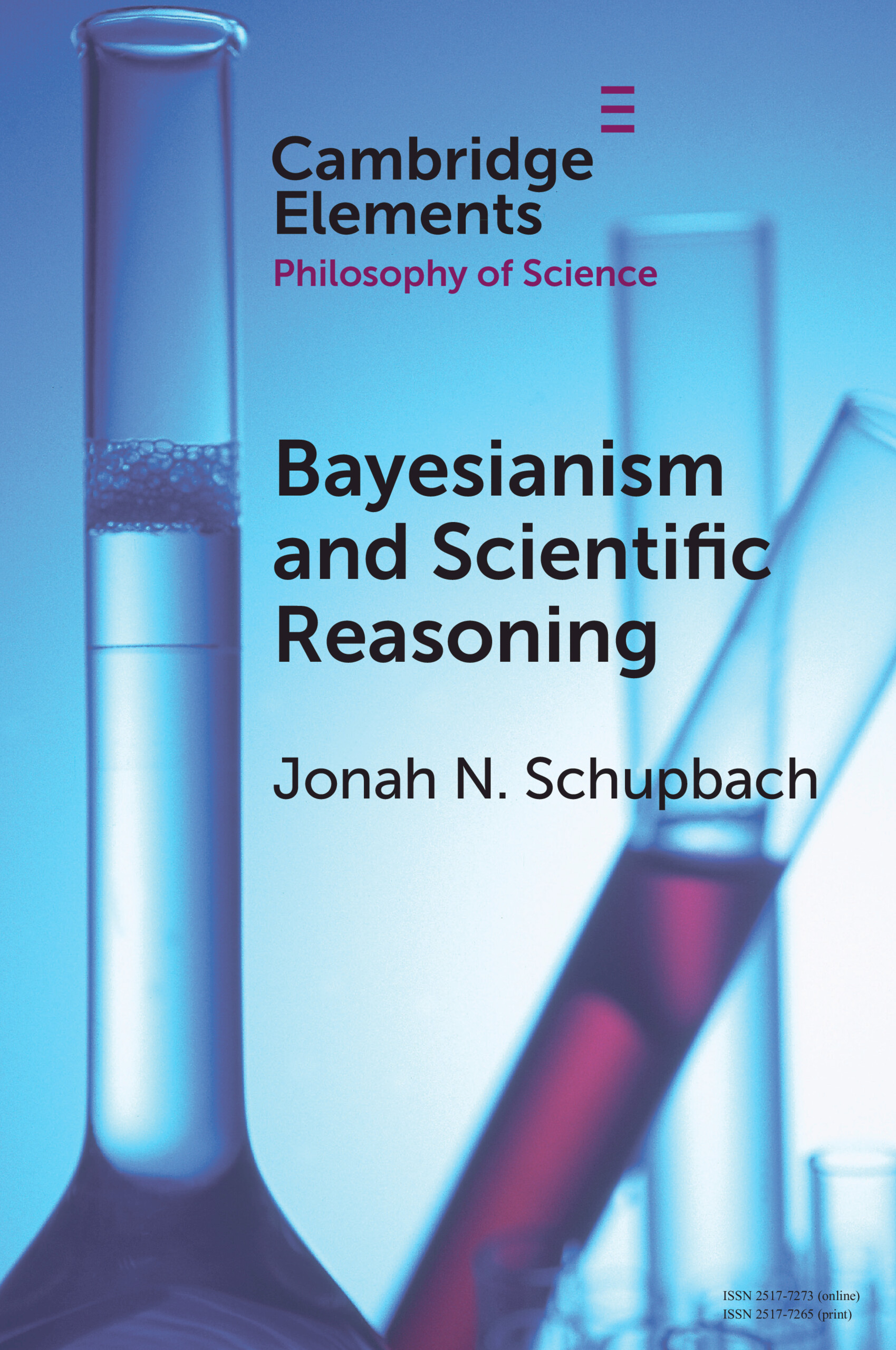
This chapter provides an introduction to Bayesianism and a sampling of its scientific applications. Section 1 summarizes the essential commitments of Bayesianism, including its interpretation of probability theory as a logic of consistency for degrees of belief. This section then clarifies some ways in which Bayesians diverge in their development and defense of further epistemological norms for rational degrees of belief. Section 2 surveys examples of the many ways in which Bayesianism is fruitfully applied in scientific practice, focusing on applications in cognitive science and cosmology.
In recent work (Schupbach 2019, 2023), I argue for a more charitable and descriptively accurate interpretation of Inference to the Best Explanation [IBE]. This chapter begins with a discussion of this new interpretation and some of its implications. Specifically, this interpretation suggests that there is a certain level of exploratory creativity built right into the logic of explanatory inference. IBE invites us to combine our prior explanatory ideas in novel ways, thus deriving new potential explanations at varying levels of generality and specificity. This creative aspect of IBE captures important aspects of human reasoning. I show that explanatory inferences across contexts of medical research provide excellent examples of IBE so interpreted. I focus especially on Parkinson's disease as an example, demonstrating how important medical innovations can be fruitfully explicated as exploratory applications of IBE.
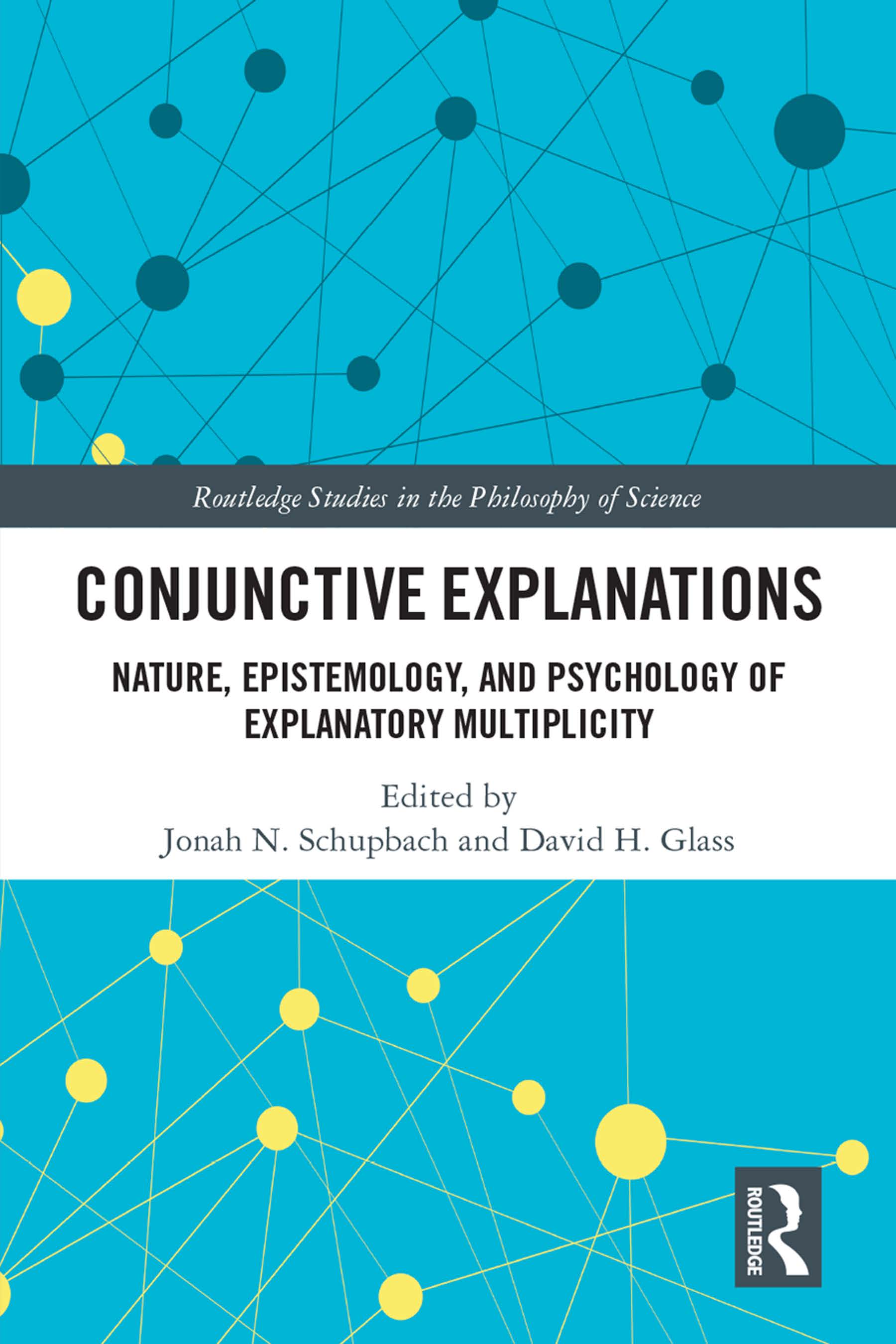
When is it explanatorily better to adopt a conjunction of explanatory hypotheses as opposed to committing to only some of them? Although conjunctive explanations are inevitably less probable than less committed alternatives, we argue that the answer is not `never'. This paper provides an account of the conditions under which explanatory considerations warrant a preference for less probable, conjunctive explanations. After setting out four formal conditions that must be met by such an account, we consider the shortcomings of several approaches. We develop an account that avoids these shortcomings and then defend it by applying it to a well-known example of explanatory reasoning in contemporary science.
Standard articulations of Inference to the Best Explanation (IBE) imply the uniqueness claim that exactly one explanation should be inferred in response to an explanandum. This claim has been challenged as being both too strong (sometimes agnosticism between candidate explanatory hypotheses seems the rational conclusion) and too weak (in cases where multiple hypotheses might sensibly be conjointly inferred). I propose a novel interpretation of IBE that retains the uniqueness claim while also allowing for agnostic and conjunctive conclusions. I then argue that a particular probabilistic explication of explanatory goodness helpfully guides us in navigating such options when using IBE.
This chapter develops and defends a formal epistemology of conjunctive explanation by determining the conditions under which multiple distinct explanations are better than one. The general approach is to identify an appropriate measure of explanatory goodness that can then be applied to conjunctive explanations. If a conjunctive explanation is to be preferred it needs to have greater explanatory virtue (e.g., power or scope) with respect to the evidence, but this explanatory gain is insufficient on its own. Given a conjunctive explanation’s greater complexity, it also has a cost associated with it and so a balance needs to be struck between the gain and the cost. We show how this can be achieved by employing a Bayesian measure of explanation proposed by I. J. Good which can be cashed out in terms of information. We also explore some properties of this measure and its application to conjunctive explanations and address the question of whether it is desirable in general to have more informative, less probable hypotheses when seeking for good explanations.
This entry provides a brief summary of the works of William Paley (1743–1805) that are of most interest and relevance to contemporary philosophy of religion.
This paper explores one way in which discussions of the nature of scientific explanation can inform the proper statement of explanatory inference. Inference to the Best Explanation (IBE) advises reasoners to infer exactly one explanation. This uniqueness claim apparently binds us when it comes to "conjunctive explanations," distinct explanations that are nonetheless explanatorily better together than apart. To confront this worry, explanationists qualify their statement of IBE, stipulating that this inference form only adjudicates between competing hypotheses. However, a closer look into the nature of competition reveals problems for this qualified account. Given the most common explication of competition, this qualification artificially and radically constrains IBE's domain of applicability. Using a more subtle, recent explication of competition, this qualification no longer provides a compelling treatment of conjunctive explanations. In light of these results, I suggest a different strategy for accommodating conjunctive explanations. Instead of modifying the form of IBE, I suggest a new way of thinking about the structure of IBE's lot of considered hypotheses.
When scientists seek further confirmation of their results, they often attempt to duplicate the results using diverse means. To the extent that they are successful in doing so, their results are said to be robust. This paper investigates the logic of such "robustness analysis" [RA]. The most important and challenging question an account of RA can answer is what sense of evidential diversity is involved in RAs. I argue that prevailing formal explications of such diversity are unsatisfactory. I propose a unified, explanatory account of diversity in RAs. The resulting account is, I argue, truer to actual cases of RA in science; moreover, this account affords us a helpful, new foothold on the logic undergirding RAs.
This paper responds to Terry Horgan's recent critique of Bayesian formal epistemology ("Troubles for Bayesian formal epistemology." Res Philosophica, 94(2):233–255, 2017). I argue that each of Horgan's criticisms misses its mark when Bayesianism is viewed as putting forward an inductive logic of confidences. Along the way, I explore the nature, scope, and limits of a defensible brand of Bayesianism.
Competition between scientific hypotheses is generally not a matter of mutual exclusivity. Consistent hypotheses can compete to varying degrees either directly or indirectly via the evidence. We motivate and defend a particular account of hypothesis competition by showing how it captures these features. Computer simulations of Bayesian inference are used to highlight the limitations of adopting mutual exclusivity as a simplifying assumption to model scientific reasoning, particularly due to the exclusion of hypotheses that may be true, while discussion of a case study demonstrates the subtleties involved in hypothesis competition in scientific practice.
Despite decades of focused philosophical investigation, Inference to the Best Explanation (IBE) still lacks a precise articulation and compelling defense. The primary reason for this is that it is not at all clear what it means for a hypothesis to be the best available explanation of the evidence. This paper first seeks to rectify this problem by developing a formal explication of the explanatory virtue of power. A resulting account of IBE is then evaluated as a form of uncertain inference. Overall, this paper offers a precise account and novel defense of one important version of IBE.
Two recently popular metaphilosophical movements, formal philosophy and experimental philosophy, promote what seem to be conflicting methodologies. Nonetheless, I argue that the two can be mutually supportive. I propose an experimentally-informed variation on explication, a powerful formal philosophical tool introduced by Carnap. The resulting method, which I call "experimental explication," provides the formalist with a means of responding to explication's gravest criticism. Moreover, this method introduces a philosophically salient, positive role for survey-style experiments while steering clear of several objections that critics of "positive experimental philosophy" raise. Thus, it provides the experimentalist with a more defensible example of how empirical work can have positive philosophical import. For these reasons, experimental explication should appeal to experimental philosophers (at least those working within the positive program) and formal philosophers alike.
Formal epistemology is a young but vibrant field of research in analytic philosophy. This entry highlights its major achievements and gives a sense of what can be accomplished by addressing problems from mainstream epistemology with the use of logic, probability theory, computer simulations, and other formal tools. The historical roots of the field are also described, and there is a discussion of new questions that have been raised by formal epistemology that should also be of interest to mainstream epistemologists.
Select Presentations (see CV for complete list)
- Exploratory Inference to the Best Explanation in Medicine. [ Venues ]
- Putting Inference Back into Inference to the Best Explanation. [ Venues ]
- Trimming IBE's Hedges: In Defense of Naïve Explanatory Inference. [ Venues ]
- Hume's Argument Against Miracles in the Bayesian Balance. [ Venues ]
- The Disjunction Objection in the Jamesian Balance. [ Venues ]
- Creative Intelligence, Abduction, and Inference to the Best Explanation. [ Venues ]
- The Logical Structure of Best Explanations. [ Venues ]
- Computer Simulations and Conceptual Engineering. [Video] [ Venues ]
- Conjunctive Explanations (with David Glass). [ Venues ]
- Inductive Logical Pluralism. [ Venues ]
- Reasoning Between Conjunctive and Competing Explanations. [ Venues ]
- IBE's Uniqueness Claim, Competition, and Conjunctive Explanations. [ Venues ]
- Logical Pluralism, Inference to the Best Explanation, and Bayesianism. [ Venues ]
- When do Hypotheses Compete? (with David Glass). [ Venues ]
- Isolating the Effects of Coherence. [ Venues ]
- Hypothesis Competition Beyond Mutual Exclusivity (with David Glass). [ Venues ]
Conference on Philosophy of Medicine (Jornadas sobre Filosofía de la Medicina); University of A Coruña; A Coruña, Spain; March 2026 (Invited).
10th Biennial Meeting of the European Philosophy of Science Association; Groningen, Netherlands; August 27-30, 2025.
History and Philosophy of Science Department Annual Alumni Lecture; University of Pittsburgh; Pittsburgh, PA; March 13, 2025 (Invited).
Philosophy Department Colloquium; Simon Fraser University; Burnaby, British Columbia, Canada; February 9, 2024 (Invited).
Philosophy Department Colloquium; University of Illinois; Urbana-Champaign, Illinois; January 26, 2024 (Invited).
Philosophy Department Colloquium; Simon Fraser University; Burnaby, British Columbia, Canada; February 9, 2024 (Invited).
Philosophy Department Colloquium; University of Illinois; Urbana-Champaign, Illinois; January 26, 2024 (Invited).
Philosophy Department Colloquium; Hillsdale College; Hillsdale, Michigan; February 27, 2025 (Invited).
16th Orange Beach Epistemology Workshop; University of Alabama; Orange Beach, Alabama; May 14-15, 2024.
XVIIth Congress on Logic, Methodology, and Philosophy of Science and Technology; Buenos Aires, Argentina; July 24-29, 2023.
Philosophy Department Colloquium; University of Illinois; Urbana-Champaign, Illinois; January 20, 2023 (Invited).
Philosophy Department Colloquium; University of Illinois; Urbana-Champaign, Illinois; January 20, 2023 (Invited).
28th Biennial Meeting of the Philosophy of Science Association; Pittsburgh, Pennsylvania; November 10-13, 2022.
8th Biennial Conference of the European Philosophy of Science Association; University of Turin, Italy; September, 2021.
Colloquium; Düsseldorf Center for Logic and Philosophy of Science; Düsseldorf, Germany; May 18, 2021.
British Society for the Philosophy of Science, Annual Conference; University of Kent; Canterbury, England; July 13-15, 2020.
Studies in Science and Technology colloquium; University of Minnesota; Minneapolis, Minnesota; December 6, 2019.
ARCHÉ Conceptual Engineering Seminar; ARCHÉ Philosophical Research Centre; University of St. Andrews; St. Andrews, Scotland; April 20, 2021 (Invited).
27th Biennial Meeting of the Philosophy of Science Association; Baltimore, Maryland; November 19-22, 2020.
7th Biennial Conference of the European Philosophy of Science Association; University of Geneva; Geneva, Switzerland; September 11-14, 2019.
Summer Seminar in Philosophy of Statistics; Virginia Tech University; Blacksburg, Virginia; August 10, 2019.
British Society for the Philosophy of Science, Annual Conference; Durham University; Durham, England; July 17-19, 2019
Conference on Bayesian Epistemology: Perspectives and Challenges; Munich Center for Mathematical Philosophy, LMU Munich, Germany; August 10-14, 2020.
Philosophy Department colloquium; University of Notre Dame; Notre Dame, Indiana; November 30, 2018.
Formal Philosophy International Conference; Higher School of Economics; Moscow, Russia; October 1-2, 2018.
Philosophy Department colloquium; University of Notre Dame; Notre Dame, Indiana; November 30, 2018.
Formal Philosophy International Conference; Higher School of Economics; Moscow, Russia; October 1-2, 2018.
27th Annual Meeting of the European Society for Philosophy and Psychology; Athens, Greece; September 5-8, 2019.
Society for Philosophy and Psychology, Preconference; University of California, San Diego; July 10, 2019.
Society for Philosophy and Psychology, Preconference; University of California, San Diego; July 10, 2019.
11th MuST Conference in Philosophy of Science, "Models of Explanation"; University of Turin; Turin, Italy; June 11-13, 2018.
Logic and Philosophy of Science Department colloquium; University of California, Irvine; Irvine, California; November 3, 2017.
School of Computing and Mathematics seminar; Ulster University; Belfast, Northern Ireland; June, 2017.
International Conference on Thinking; Brown University; Providence, Rhode Island; August 4-6, 2016.
School of Computing and Mathematics seminar; Ulster University; Belfast, Northern Ireland; June, 2017.
International Conference on Thinking; Brown University; Providence, Rhode Island; August 4-6, 2016.
Philosophy Department colloquium; Western Michigan University; Kalamazoo, Michigan; October 13, 2017 (Alumni Achievement Award).
Northwest Philosophy Conference; North Idaho College; Coeur d'Alene, Idaho; October 9-10, 2015.
Northwest Philosophy Conference; North Idaho College; Coeur d'Alene, Idaho; October 9-10, 2015.
6th Biennial Conference of the European Philosophy of Science Association; University of Exeter; Exeter, England; September 8, 2017.
Workshop on Unification and Coherence; Düsseldorf Center for Logic and Philosophy of Science; Düsseldorf, Germany; January 16, 2014.
Workshop on Unification and Coherence; Düsseldorf Center for Logic and Philosophy of Science; Düsseldorf, Germany; January 16, 2014.
45th Annual Meeting of the Society for Exact Philosophy; University of Calgary; Calgary, Alberta; May 5-7, 2017.
Biennial Meeting of the Philosophy of Science Association.; Atlanta, Georgia; November 3-5, 2016.
Biennial Meeting of the Philosophy of Science Association.; Atlanta, Georgia; November 3-5, 2016.
Research Profile
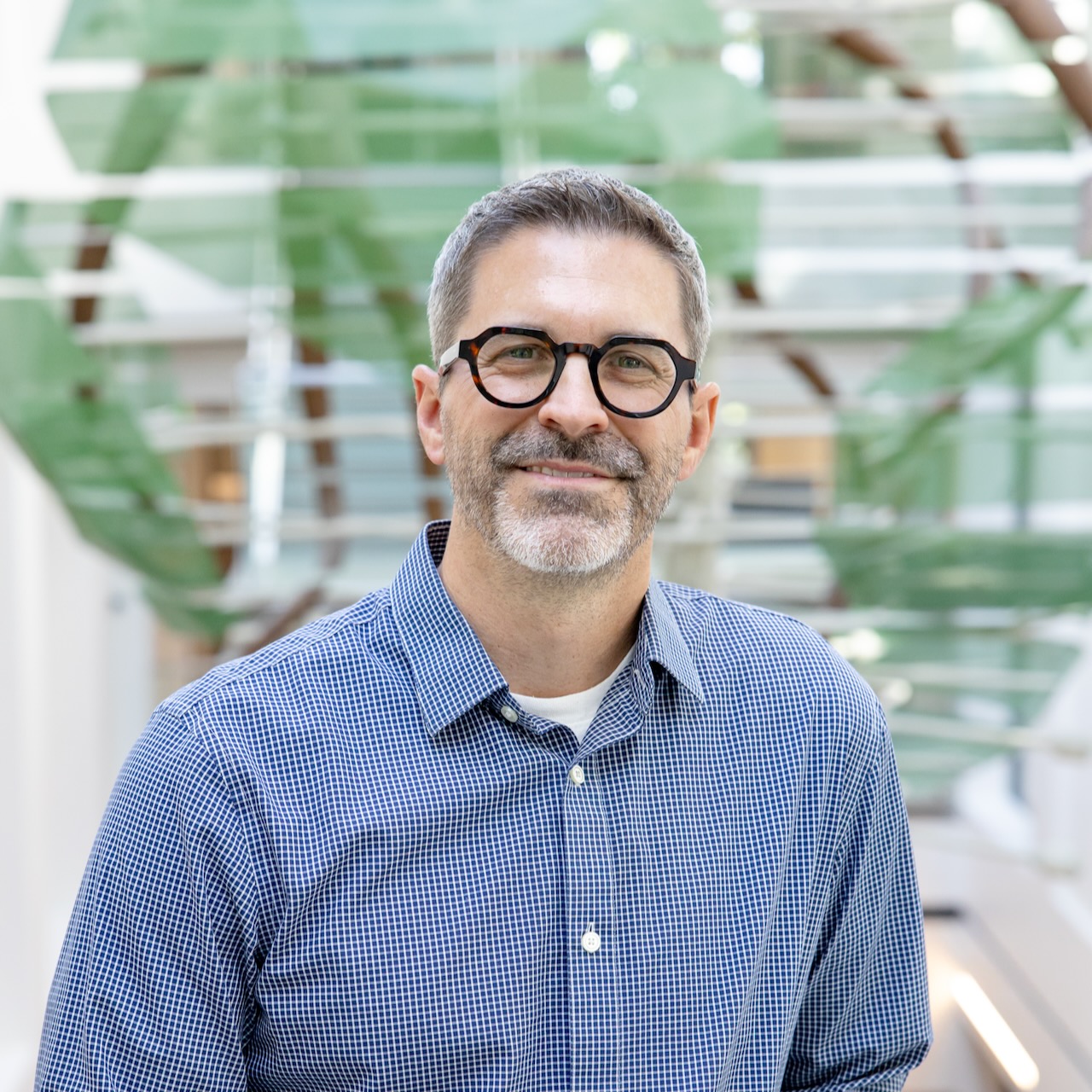
My areas of specialization include the philosophy of science, epistemology (formal and mainstream), and formal logic. I also have strong research interests in cognitive science and philosophy of religion. My main line of research investigates the nature, logic, and limitations of human reasoning. Working on such topics, I've naturally found myself having to cross interdisciplinary boundaries, especially between philosophy, logic, intellectual history, and the cognitive, mathematical, and computer sciences. Drawing from these disciplines, I hope to shed new light on the modes of reasoning humans actually employ, whether as individuals in everyday settings, or in more organized, social endeavors such as the sciences. And by bringing traditionally distinct areas of research on human reasoning to bear on one another, I aim to provide new advice and correctives for improving human reasoning in the real world.I am the author of the book Bayesianism and Scientific Reasoning (Cambridge University Press, 2022) and co-editor of the book Conjunctive Explanations (Routledge, 2023). In addition to these books, my research has been published in a number of top philosophy and psychology journals. I am currently working on a new book, tentatively titled Grasping the 'Why?': In Defense of Naïve Explanatory Inference.
Select Courses
- († = graduate course; ‡ = independent study)
- S27: Inductive Logic
- † S26: Rational Choice Theory
- S26: Reasoning and Rational Decision Making
- F25: History and Philosophy of Science
- † S25: New Illustrations of the Logic of Science
- † S25: Metaphysics (with Anne Peterson)
- S24: Great Science Books (co-instructor)
- S24: Deductive Logic
- ‡ S19: Bayesianism
- † F18: Metaphysics and Logic (with Anne Peterson)
- † S18: Advanced Deductive Logic
- † S17: Advanced Inductive Logic
- † F15: Metaphysics of Modality (with Anne Peterson)
- † S15: Advanced Deductive Logic
- ‡ F13: Scientific Explanation & Explanatory Reasoning
- F13: Foundations of Probability and Statistics
- † S13: Foundations of Logic and Mathematics
- † S12: Symbolic Logic
Other Activities
- Templeton Project: Conjunctive Explanations: How Science and Religion Can Work Together
- Conference: Scientific Explanations, Competing and Conjunctive
- Conference: Inductive Logic and Confirmation in Science 2
Site Design
- Inspired by JC Beall's site design,
- Which was based on Ted Sider's